
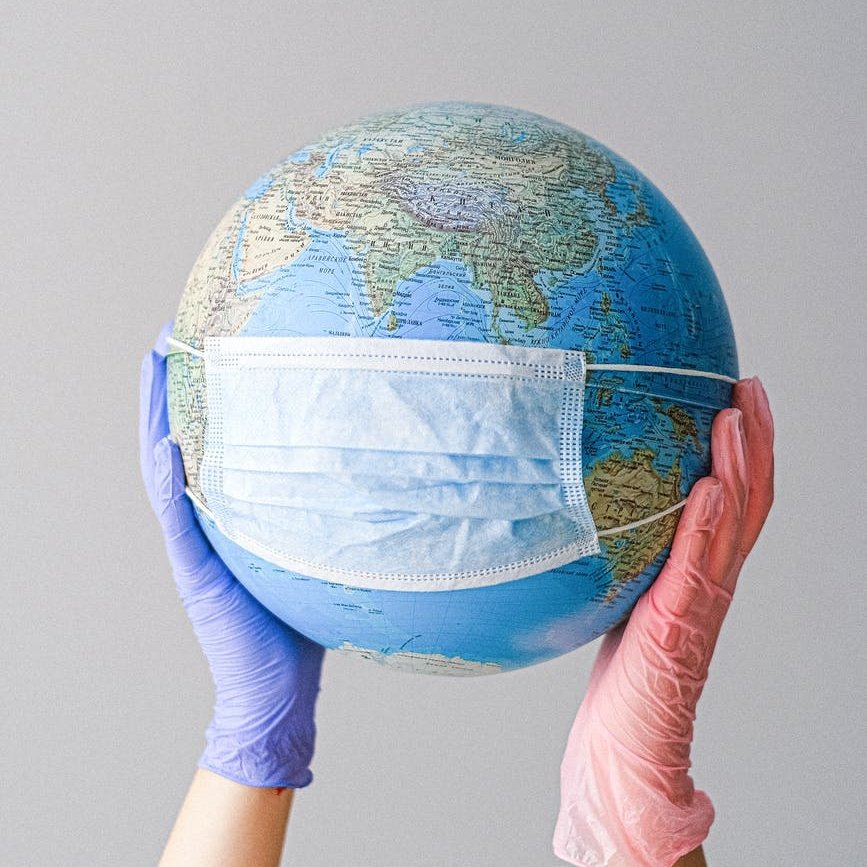
Covid19 Precautions…

Exercise at home using various safe, simple, and easily implementable exercises is well suited to avoid the airborne coronavirus and maintain fitness levels. Such forms of exercise may include, but are not limited to, strengthening exercises, activities for balance and control, stretching exercises, or a combination of these. Examples of home exercises include walking in the house and to the store as necessary, lifting and carrying groceries, alternating leg lunges, stair climbing, stand-to-sit and sit-to-stand using a chair and from the floor, chair squats, and sit-ups and pushups. In addition, traditional Tai Ji Quan, Qigong exercises,15 and yoga16 should be considered since they require no equipment, little space, and can be practiced at any time. The use of eHealth and exercise videos, which focuses on encouraging and delivering physical activity through the Internet, mobile technologies, and television17 are other viable avenues for maintaining physical function and mental health during this critical period.
Since the pandemic reached India, there have been alarming reports of high-risk behaviour, such as suspected Covid-19 patients leaving hospitals without clearance. We don’t need to stress how dangerous this is — please cooperate with medical and government authorities.
Out to dinner with my cousin one night, we had to have our temperature checked before we could enter the restaurant, located within a large hotel. At a local supermarket, before I could pick up a basket or pull out a shopping cart, a security guard offered me some hand sanitizer and checked my temperature.
With this family of coronaviruses, that could potentially allow us to have a vaccine ready before the next one even becomes a pandemic. So theoretically, we could stop the next pandemic in its tracks.
Ventilation in the prone position improves lung mechanics and gas exchange and is currently recommended by the guidelines.29,30 The prone position, if planned, should not be a desperate final attempt but should be considered in the early stages of the disease,40 as the evidence suggests that the early application of prolonged ventilation in the prone position decreases 28- and 90-day mortality in patients with severe ARDS.41 Prone position ventilation is currently widely used for critically ill patients in Wuhan (fig. 9). Lung recruitment maneuvers, via transient elevations in airway pressure applied during mechanical ventilation, can open collapsed alveoli and thus increase the number of alveoli available for gas exchange. Lung recruitment maneuvers do not significantly reduce mortality but may improve oxygenation and shorten the length of hospital stay in ARDS patients.42 Overall, recruitment maneuvers are not supported by high-quality evidence,43 and caution should be exercised when using it because it can be irritating, incite coughing, and generate aerosols.
Steps to reduce risk of getting sickThere are things you can do to reduce your risk of getting sick. Keep space between yourself and others (stay 6 feet away, which is about two arm lengths). Wash your hands often. Avoid touching your eyes, nose, and mouth with unwashed hands. Cover coughs and sneezes with a tissue or the inside of your elbow. Then wash your hands. Take precautions as you go about your daily life and attend events. Clean and disinfect surfaces and things you touch often. What You Can Do How to Protect Yourself
India is conducting only about 90 tests a day, despite having the capacity for as many as 8,000. So far, 11,500 people have been tested, according to The Associated Press.
“Our patient population represents the largest and densest immunocompromised population in the world,” says Peter WT Pisters, M.D., president of MD Anderson. “We must accept that we will co-exist with COVID-19 until we reach a widespread state of immunity. Our readiness to protect our patients and our workforce is crucial.”
Cancer patients are uniquely vulnerable to the novel coronavirus, COVID-19 , because their immune systems are compromised due to disease and/or treatment. That’s why MD Anderson has taken special precautions to protect the health and safety of our cancer patients when they visit our campuses during the pandemic.
Meanwhile, many people have volunteered to take part in a controversial testing method called human challenge trials. As of April 27, a global initiative called 1DaySooner had registered 3,817 people in 52 countries who had signed up for such trials. The method, which involves intentionally infecting volunteers with the novel coronavirus, is being promoted in order to “speed up” the process of preparing a vaccine.
We are increasing the number of video visits, as appropriate, to limit your exposures and travel. These are being scheduled in place of in-person visits for your safety and convenience. Get your questions answered about virtual visits. Patients may enter at the following locations on our Texas Medical Center campus:
We use cookies to personalize contents and ads, offer social media features, and analyze access to our website. In your browser settings you can configure or disable this, respectively, and can delete any already placed cookies. For details, please see your browser’s Help section (by pressing F1). Please see our privacy statement for details about how we use data.
Data on whether pregnant women have more severe cases of COVID-19 or less are unclear. Reports from China involving more than a dozen women infected with COVID-19 late in pregnancy suggest their symptoms, if any, are similar to those of other adults. But Denise Jamieson, an expert on emerging infectious diseases and pregnancy at Emory University, says it is too soon to understand the full impact of the disease during pregnancy. “I’ve stopped saying the data we have are reassuring,” she says. “We don’t have nearly enough information to draw conclusions.”
Exclusive Corporate feature This feature is limited to our corporate solutions. Please contact us to get started with full access to dossiers, forecasts, studies and international data.
The morning of his esophageal cancer surgery, Dustin Pruett kissed his wife goodbye on the skybridge outside the Rotary House Hotel. He was nervous about just one thing. Not the seven-and-a-half-hour surgery or the weeks of recovery on a feeding tube. For Dustin, the hardest part was knowing he was about to be away from his wife and four children for about 10 days. Like other hospitals, MD Anderson has temporarily restricted visitors at all of its campuses in order to protect its patients and workforce members from the novel coronavirus, COVID-19. That meant Dustin’s family couldn’t visit him in the hospital while he recovered from his surgery. “I’m glad the visitor policy is in place. The processes and policies at MD Anderson are top-notch, and I feel completely safe,” Dustin says. “But knowing I couldn’t have my family with me took the wind out of me. I had this huge support system and they couldn’t be there with me.” “Fortunately,” he says, “we found ways to stay in touch, and my team at MD Anderson helped me through this tough time.” Coming to MD Anderson for esophageal cancer surgery When Dustin first came to MD Anderson in late February after being diagnosed with stage III adenocarcinoma of the esophagus, he brought his wife, dad and stepmom. At his first appointment, he met his care team, which included oncologist Mariela Blum Murphy, M.D., radiation oncologist Michael O’Reilly, M.D., and thoracic surgeon Ara Vaporciyan, M.D. Together, they planned his treatment, which would start with six weeks of chemoradiation. That meant he would undergo chemotherapy while simultaneously getting daily doses of radiation therapy. The goal was to shrink the tumor that stretched from the bottom third of his esophagus into the upper portions of his stomach. Once the tumor had shrunk, he would undergo surgery to remove the rest of it. “We came to MD Anderson because everyone we talked to had told us it was the best. After being there it was easy to see why,” Dustin says. “I was confident in the plan my doctors had laid out for me.” Dustin’s initial esophageal cancer treatment Dustin started chemoradiation in March. Every Monday, he had a three-hour chemotherapy infusion. He wore a chemotherapy pump through Friday. “That pump felt like a part of me. I took it with me everywhere I went. And it wasn’t a part of me I necessarily liked,” Dustin says. “But I was a free man on Saturdays and Sundays.” In addition, he had daily radiation therapy. Each morning his wife or dad would drop him off at MD Anderson, then go get breakfast while he had his treatment. “It wasn’t that bad,” Dustin says. “I had a great group of radiotherapists who always put my favorite music on, made me comfortable and asked how I was doing. They made something that was not so enjoyable almost enjoyable.” At the start of his treatment, Dustin and his family rented a studio apartment in Houston. Originally, they flew home to Georgia on the weekends, but as COVID-19 cases increased across the country, they decided it was safer to stay in Houston for the rest of his treatment. “It worked out better because I was not feeling up to traveling,” Dustin says. Esophageal cancer surgery during the COVID-19 pandemic After a short return home in May, Dustin, his wife, his dad and stepmom, and his two oldest children traveled to Houston in June for his surgery. During the procedure, called a transthoracic (or Lewis) esophagectomy, Vaporciyan removed the tumor, part of the esophagus above it and some of the stomach below it. His surgery team also removed Dustin’s gallbladder because it had a stone in it. They then pulled his stomach up to where his esophagus now ended and connected the two so he could swallow again. After surgery, Dustin stayed in his hospital bed two days, just resting. He didn’t even turn on the TV. But he made sure to FaceTime with his family multiple times a day to help lift his spirits. Knowing he was missing his family, Dustin’s care team, especially his nurses, stopped by to visit often and went out of their way to make sure he was comfortable. They encouraged him to take walks down the hall to help ease his recovery. COVID-19 visitor policy didn’t keep him from connecting with family Four days after his surgery, Dustin took a walk and stopped to look out the window in the floor’s common area. Although he was seven stories up, he immediately recognized the view, just outside a parking garage. He called his wife and asked her to bring the kids to that spot. For the first time in four days, Dustin was able to see his family in person, even if it was at a distance. “When I saw them standing on the sidewalk, I burst into tears,” Dustin says. “It was a sight for sore eyes.” Vaporciyan, who was checking on his patients on the floor, spotted Dustin standing near the window. Dustin “introduced” Vaporciyan to his family over speakerphone, and Vaporciyan gave an update: Dustin, who was cancer-free after the surgery, was continuing to do well. Vaporciyan even took a picture of Dustin and his family through the window before visiting his next patient. “I was so happy Dustin was able to see his family, and it showed what an important part of the recovery process that is. It’s motivated me to do everything I can to help my patients stay in touch with their families while upholding our necessary visitor policies,” Vaporciyan says. “This has showed me the courage and bravery our patients have.” Life after esophageal cancer Seven days after his surgery, Dustin returned home. About a month later, his feeding tube was removed. Little by little, he’s been able to expand the portion sizes of his meals. He plans to come to MD Anderson every three months for follow-up appointments. “It’s been baby steps,” he says. “But I’m feeling some normalcy again.” Request an appointment at MD Anderson online or by calling 1-877-632-6789.
Patients with confirmed or suspected COVID-19 should be regarded as having an augmented risk of presenting potentially difficult and complicated intubation for the following reasons. First, when a patient requires intubation for acute hypoxemic respiratory failure, they have minimal to no respiratory reserve, and their compensatory mechanisms have already been exhausted. It is common to see a patient who starts with a dangerously low Spo2 quickly decline after loss of spontaneous breathing, followed by a slow recovery with manual facemask ventilation. Second, due to strict infection control and the urgency of intubation, a careful airway evaluation is frequently not possible. Third, the personal protective equipment mandated by the level III scaled precaution makes the performance of the procedure clumsy, which may easily compromise the intubation process. Fourth, strict infection and traffic control restrict backup supplies and helpers from being readily available when they are needed. Fifth, the psychological pressure related to concerns of cross-infection challenges the providers, which may make an otherwise easy intubation complicated.
user light iconSteps to reduce risk of getting sickThere are things you can do to reduce your risk of getting sick. Keep space between yourself and others (stay 6 feet away, which is about two arm lengths). Wash your hands often. Avoid touching your eyes, nose, and mouth with unwashed hands. Cover coughs and sneezes with a tissue or the inside of your elbow. Then wash your hands. Take precautions as you go about your daily life and attend events. Clean and disinfect surfaces and things you touch often. What You Can Do How to Protect Yourself
“If you have minor symptoms, such as a slight cough or a mild fever, there is generally no need to seek medical care. Stay at home, self-isolate and monitor your symptoms. Follow national guidance on self-isolation. However, if you live in an area with malaria or dengue fever it is important that you do not ignore symptoms of fever.””Seek immediate medical care if you have difficulty breathing or pain/pressure in the chest. If possible, call your health care provider in advance, so he/she can direct you to the right health facility.”
Not all masks are created equal. So, the one that’s best depends on three things: who you are, where you are and what you’re doing.
Then, spotlight falls on Remdesivir as a possible treatment for critical cases of novel coronavirus disease (COVID-19). Globally, it is one of the four possible lines of treatment being investigated in the Solidarity trials under the aegis of the World Health Organization (WHO). While the drug is yet to get approval in any country to treat COVID-19, recent studies have claimed they have found promising results.
Chinese medical guidelines on the new coronavirus recommend newborns be isolated from infected mothers for at least 2 weeks or until the mother is no longer considered infectious. They also recommend against infected mothers breastfeeding. The U.S. Centers for Disease Control and Prevention (CDC) also takes a cautious stance, recommending that “facilities should consider temporarily separating the mother who has COVID-19 … from her baby until the mother’s transmission-based precautions are discontinued.” However, CDC adds that “risks and benefits of temporary separation of the mother from her baby should be discussed with the mother by the health care team.”

 RIGHT TO INFORMATION